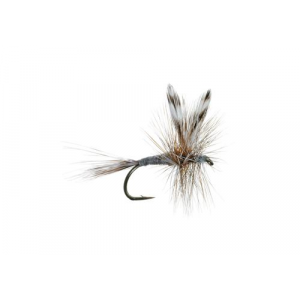
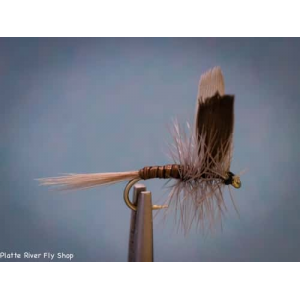
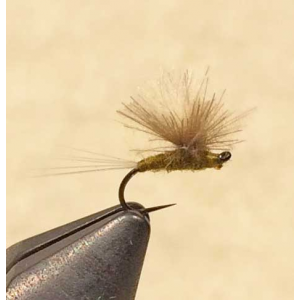
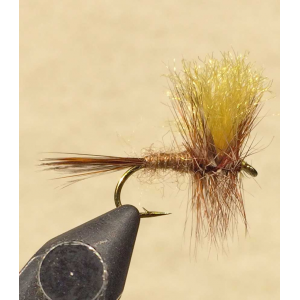
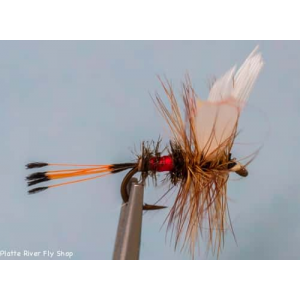
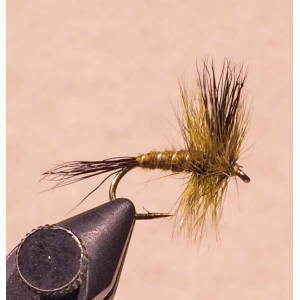
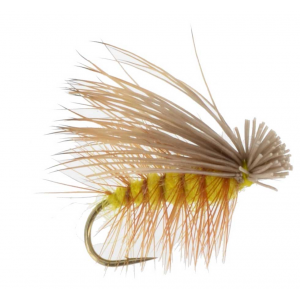
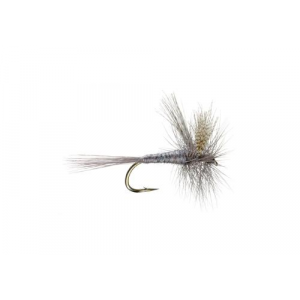
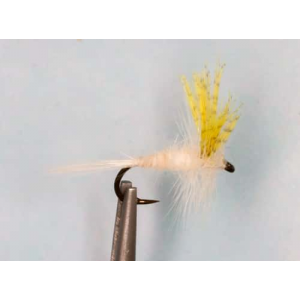
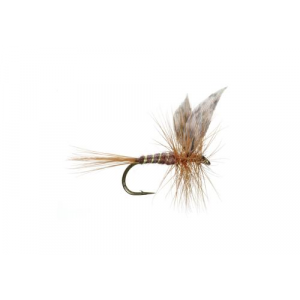
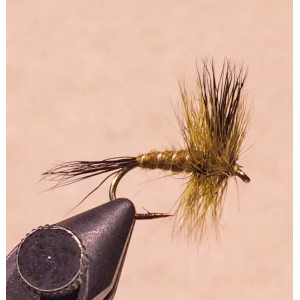
This classic trout pattern was originally developed in the early 1900s. It is tied with palmered hackle of two contrasting colors. The main body is tied with a dark color (traditionally brown) for high visibility by the trout looking up, with a couple turns of a light color (traditionally white) for high visibility for the angler - particularly in low light conditions.
The Elk Hair Caddis is a staple in your trout fly box. Imitating a hatching caddis fly, it can be tied in sizes 10-20 and in just about any color combination of dubbing, hackle, and wing. They may be thought of for trout, but you can also find uses for them to target smallmouth bass and panfish.
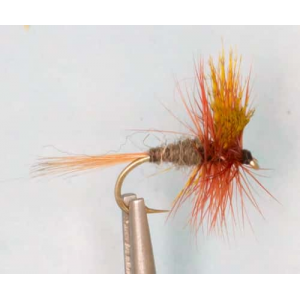
The Henryville fly was created by Hiram Brobst and was christened on the Henryville section of Pennsylvania's Broadhead Creek. The Henryville is a superior adult caddis imitation and has been around for many years. One of the classic dry flies, it is excellent for skittering, or you can clip the hackle on the bottom so that it will stay upright and float lower in the film
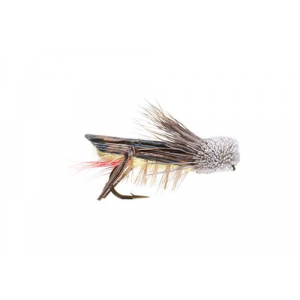
Created by Frank Hornberg in the 1920's, this fly was originally designed to imitate a caddisfly. Interestingly enough, this pattern eventually became considered a streamer. The versatility of this fly makes it a staple in your fly box. Fish it on top when trout are feeding on adult damsels or caddisflies, or fish it as a streamer. Larger sizes will work great for bass and panfish, too!
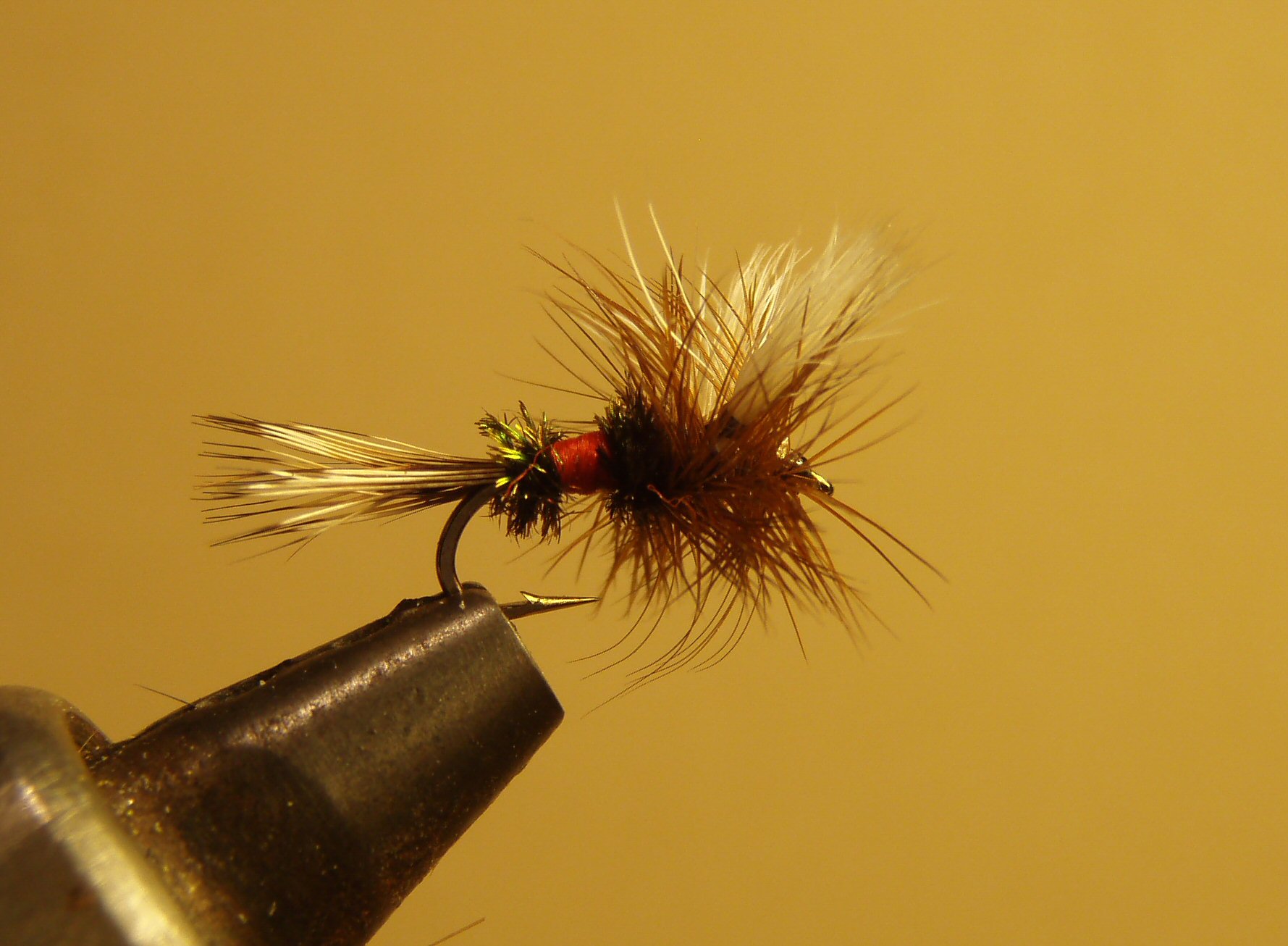
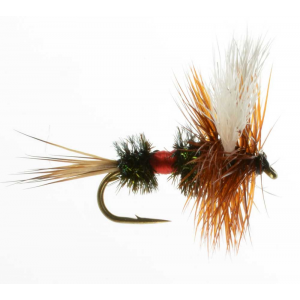
The Royal Coachman is an artificial fly that has been tied as a wet fly, dry fly and streamer pattern. Today, the Royal Coachman and its variations are tied mostly as dry flies and fished floating on the water surface. It is a popular and widely used pattern for freshwater game fish, particularly trout and grayling. Large streamer versions are also used for winter steelhead and Atlantic salmon.
First tied by Lee Wulff, this Royal Coachman variation is a staple in a trout fisherman's fly box. It imitates many types of mayflies as well as some terrestrials.
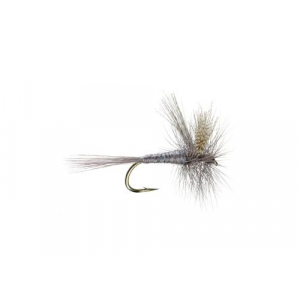
The Rusty spinner is named due to the rusty colored body used to tie the fly pattern. As it turns out, the spent mayfly of a number of species turns a rusty color regardless of the original body color. Thus, the Rusty Spinner imitates a number of mayfly species.
The White Wulff is the perfect pattern to imitate the Eastern Green Drake mayfly spinner. While this fly carries the namesake of the iconic fly tier Lee Wulff, it was actually developed in 1929 by Walt Dette and Ted Townsend as the Coffin Fly.