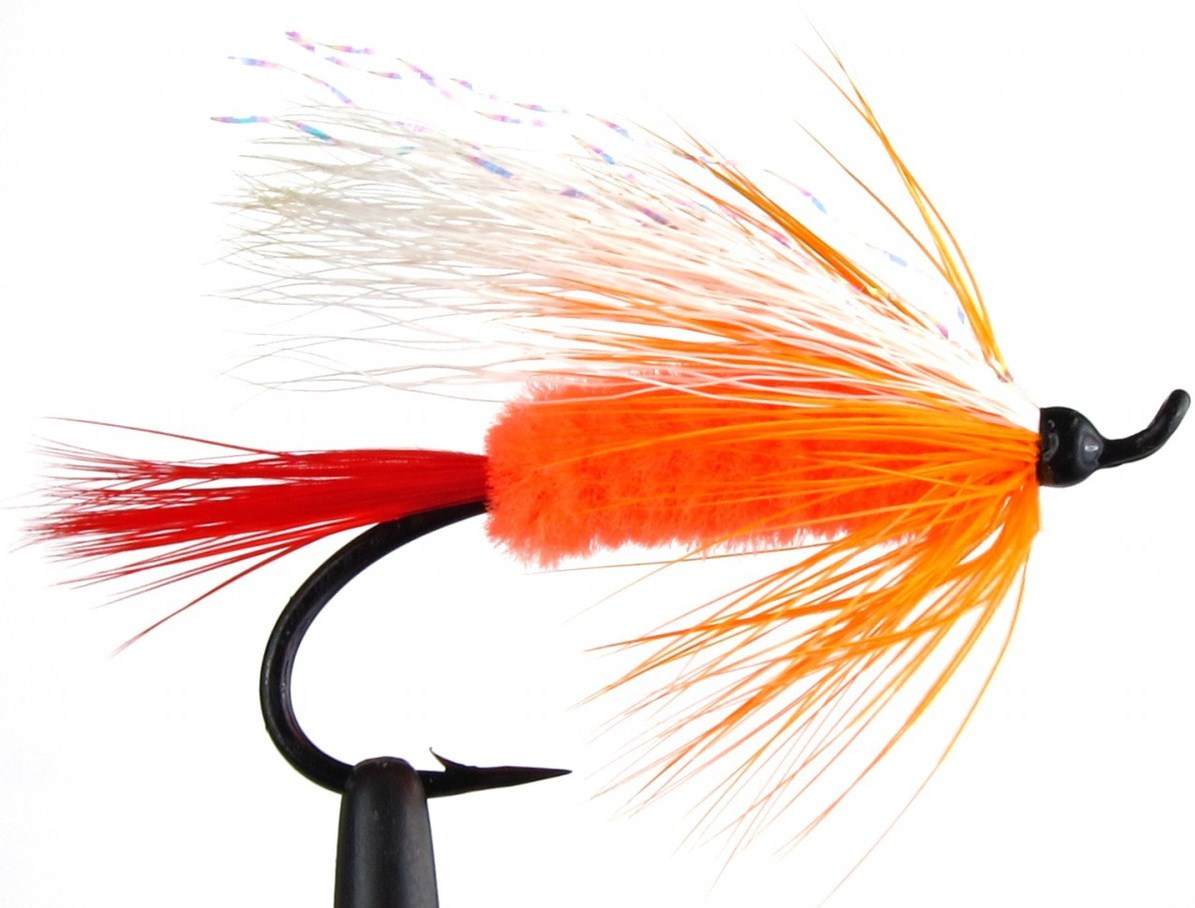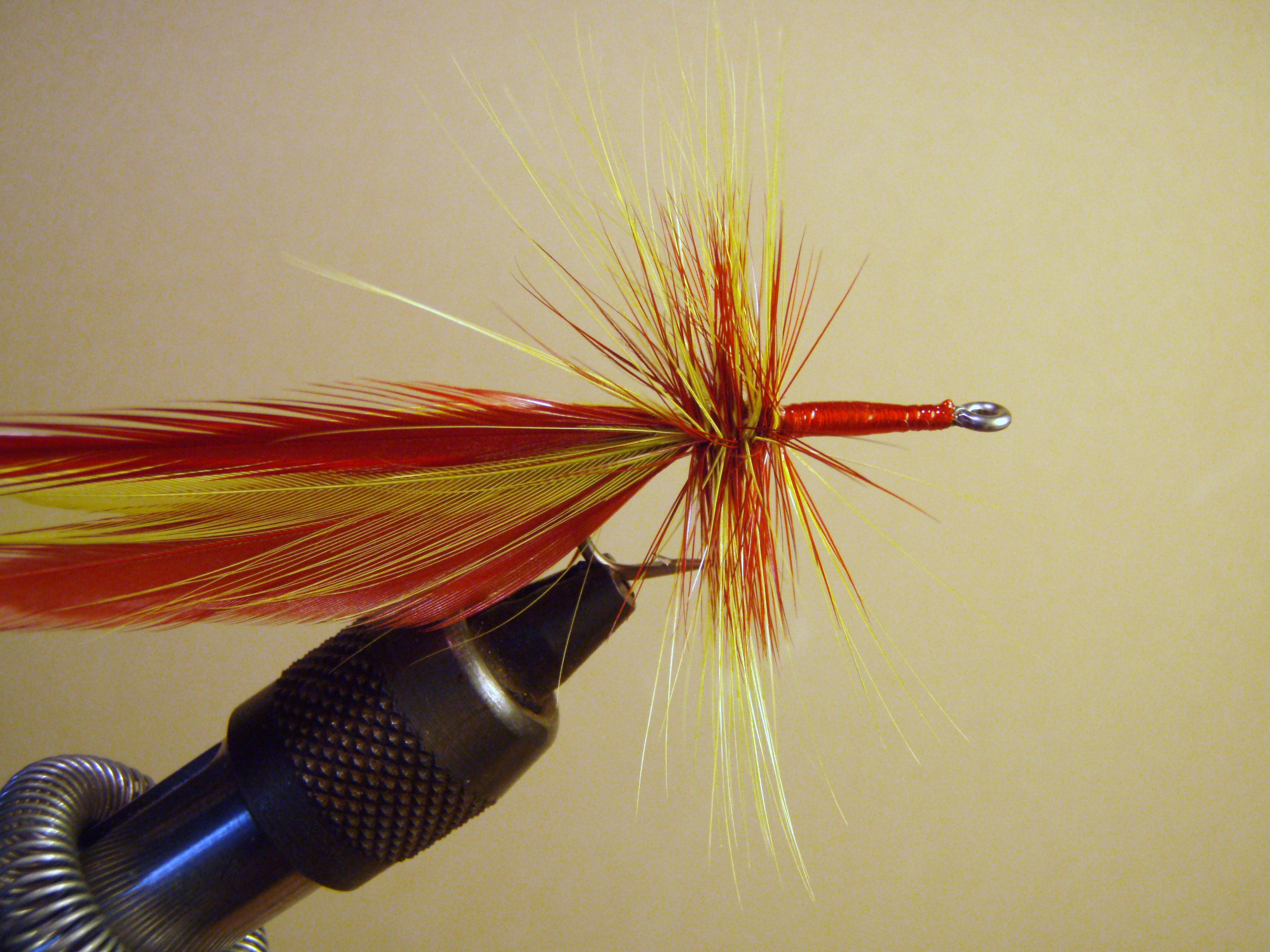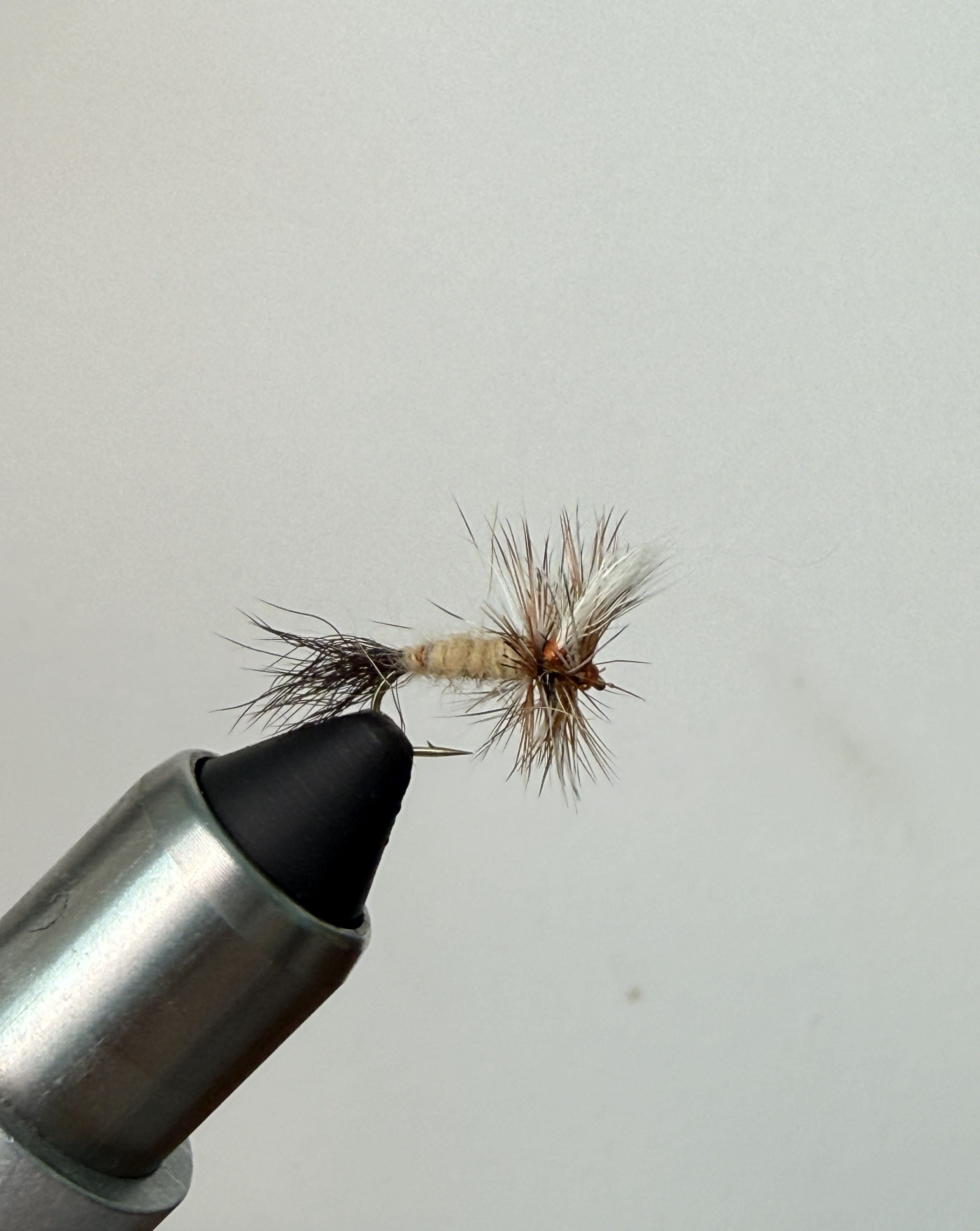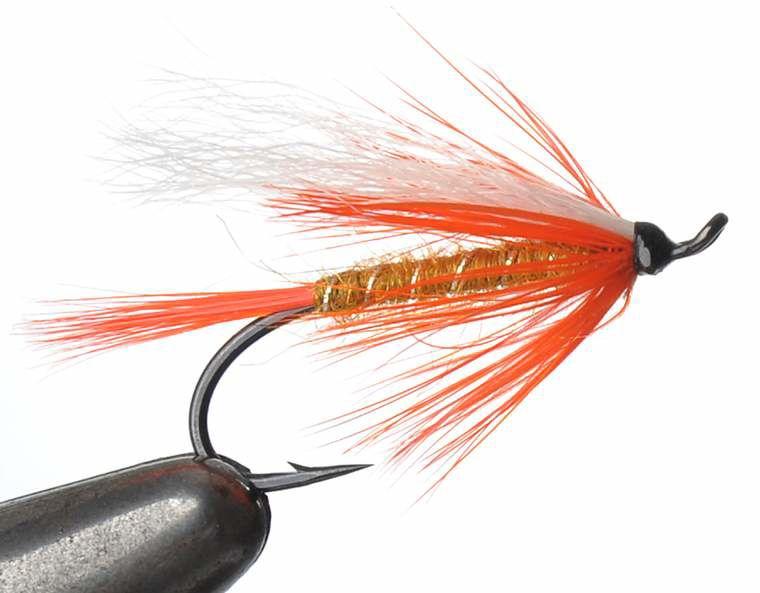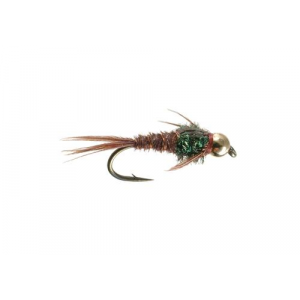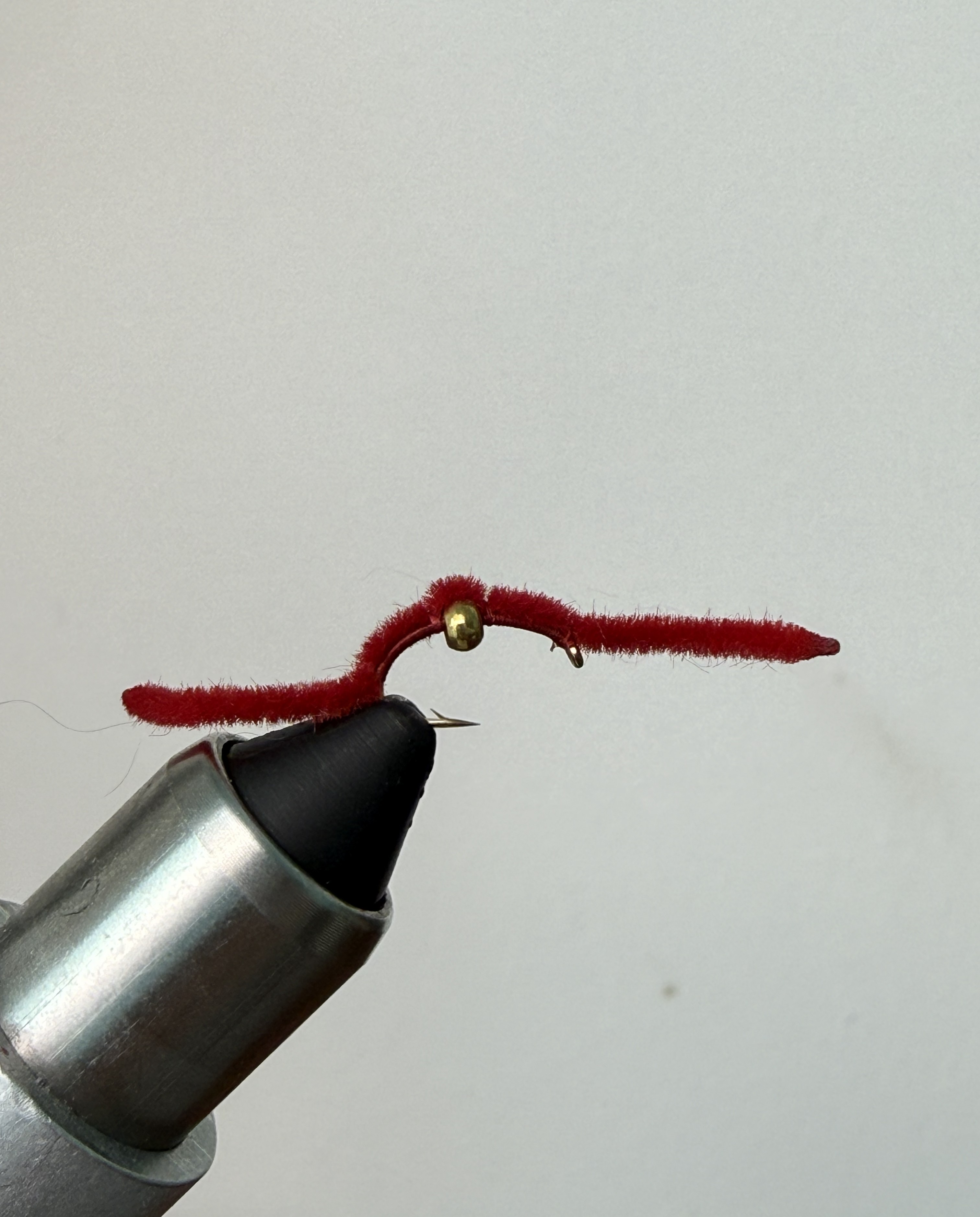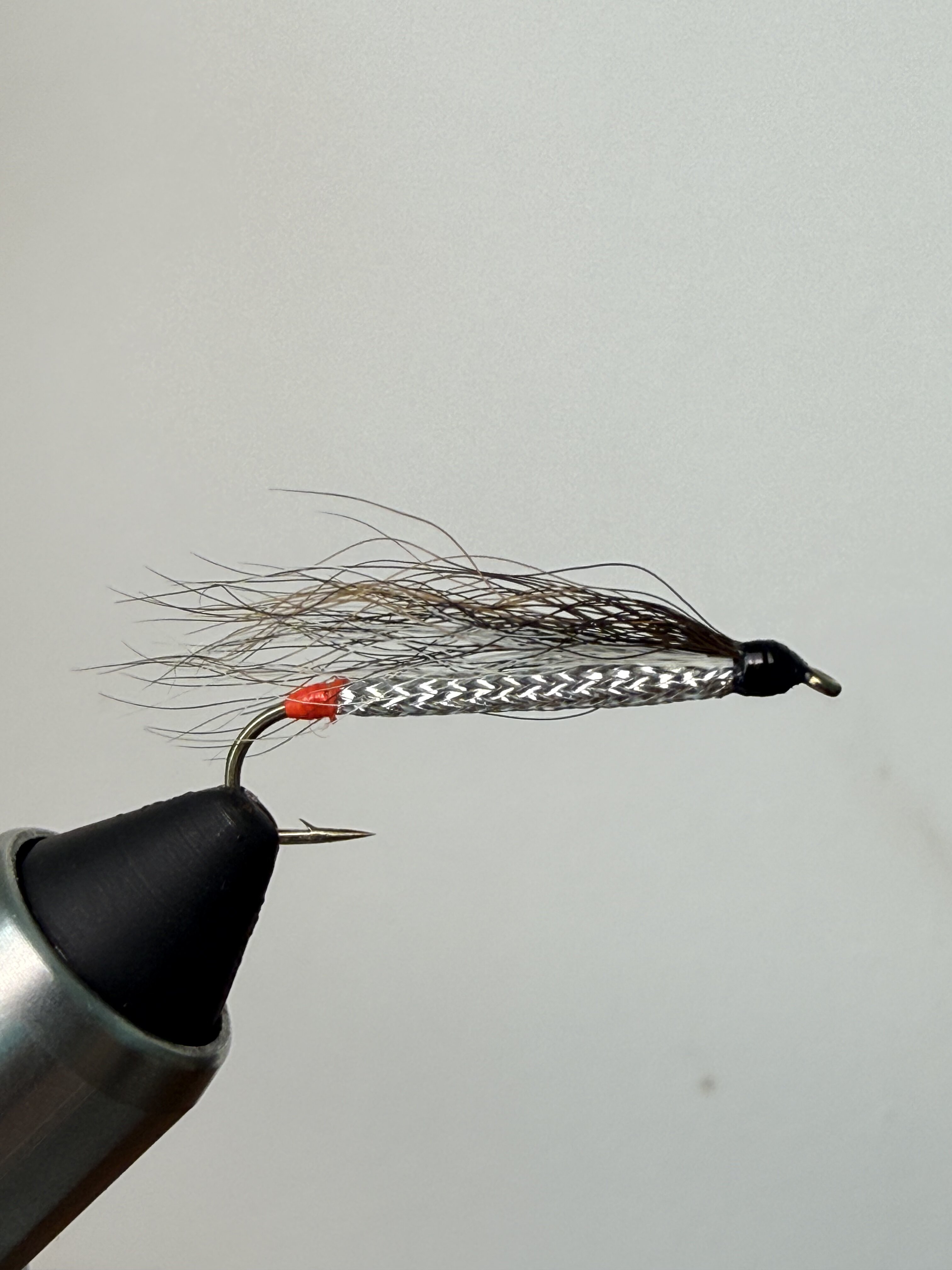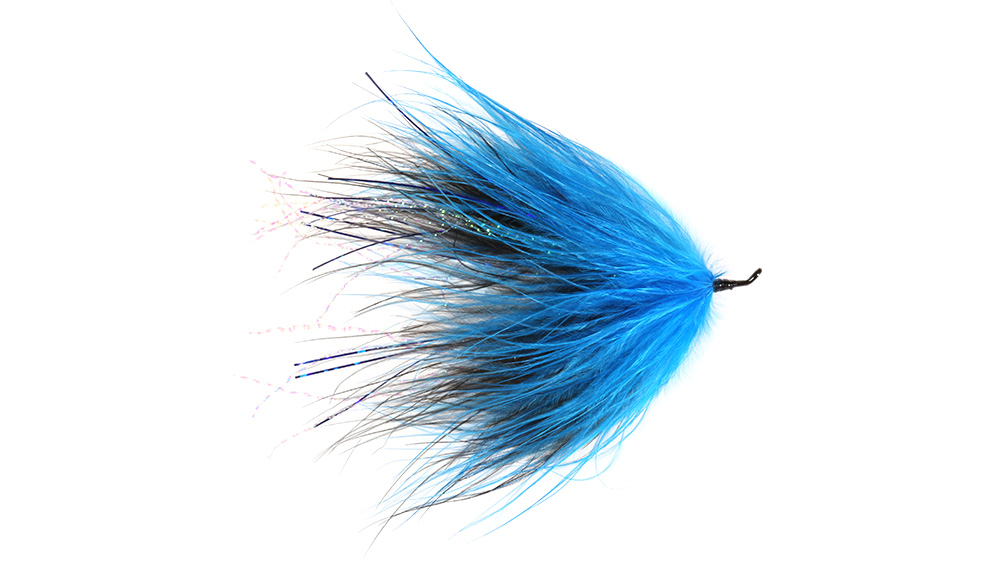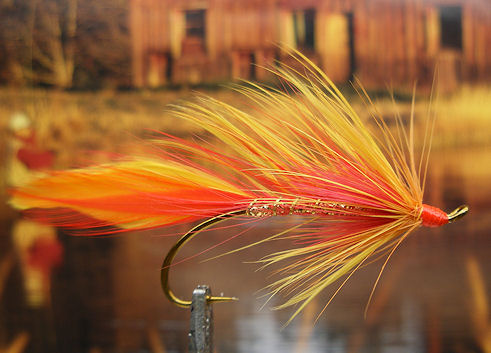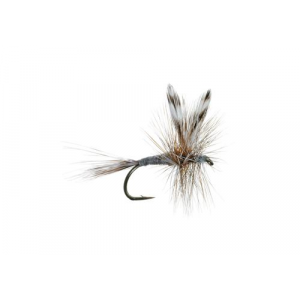
A Pacific Northwest steelhead standard that has also become one of the most productive Alaska trout and char patterns. A favorite of flyfishers all over Alaska for steelhead, coho, and pink salmon too.
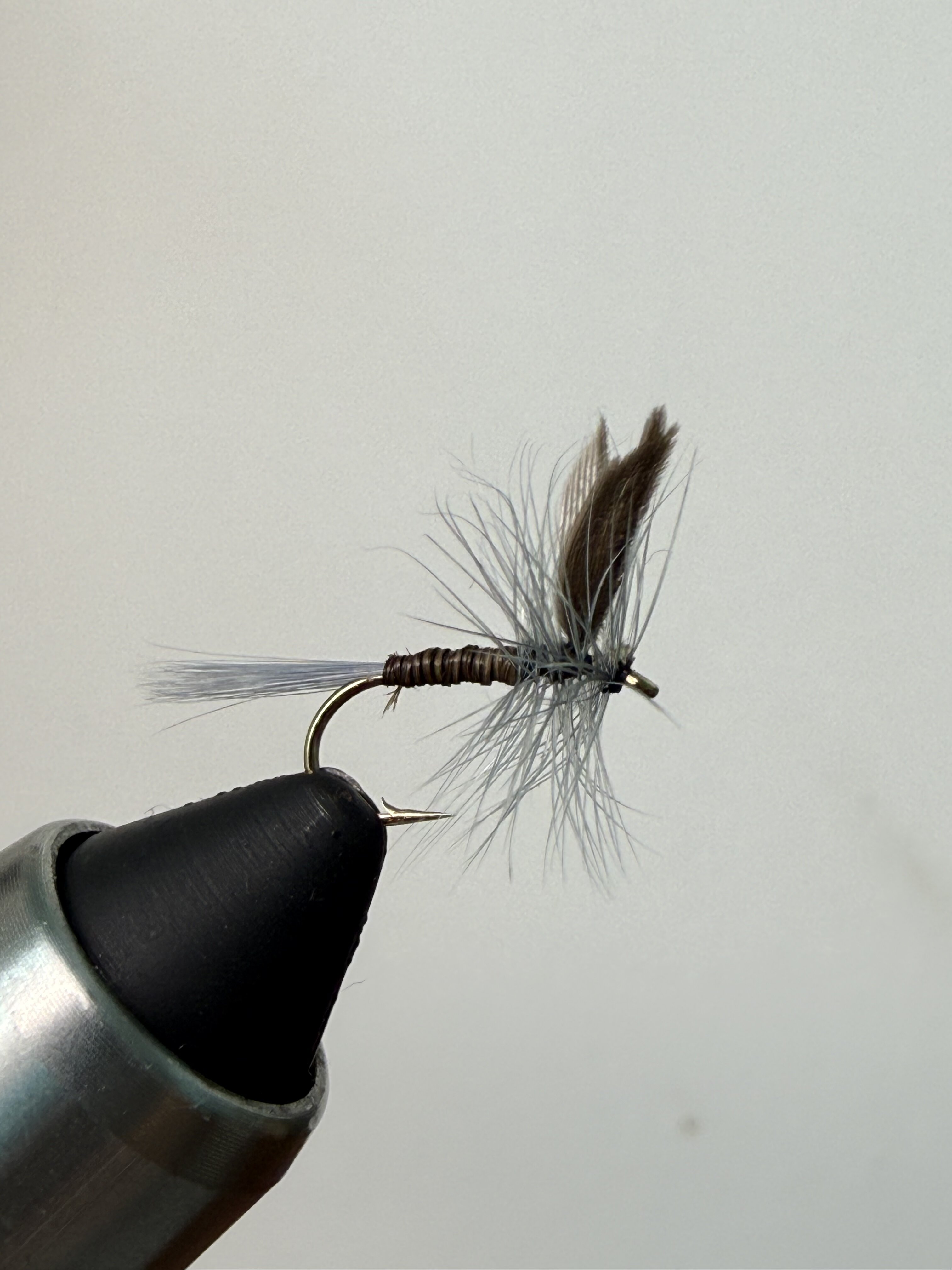
This classic trout pattern was originally developed in the early 1900s. It is tied with palmered hackle of two contrasting colors. The main body is tied with a dark color (traditionally brown) for high visibility by the trout looking up, with a couple turns of a light color (traditionally white) for high visibility for the angler - particularly in low light conditions.
A long proven must for Atlantic salmon on the storied rivers of eastern Canada, and a trusty favorite for steelhead on many western fisheries too, the Black Bear Green Butt is equally deadly on both the deep-sunk and near-surface swings. Surprisingly effective in smaller sizes when waked or skated using the riffle hitch technique as well, the Black Bear Green Butt is a wise and reliable choice indeed.
The Blue Charm began over a century ago as a simple British featherwing pattern; often tied as a small “low-water†fly. Since then it has become a popular and effective fly pattern everywhere Atlantic salmon are fished. Variations include adding elements of the original, such as an ostrich herl butt or Golden pheasant topping. The original mallard or turkey and teal feather wing has been replaced by grey squirrel tail, sometimes with a Krystal lash underwing. Newfoundlanders like to substitute moose hair for the wing, or, recently, a white calf-tail wing. Other variations include hackle substitution of iridescent blue peacock neck feather or a lighter blue colour such as Silver Doctor blue
The Clouser Minnow is probably the most all-around useful fly ever created. It will catch nearly any freshwater or saltwater fish. The Clouser imitates nearly any baitfish depending on the color scheme, and can even imitate crayfish, shrimp, or crabs. The fly naturally rides hook point up, helping to avoid snags. This fly is most commonly tied with darker colors on the fly's back (while it's swimming) and lighter colors on the belly.