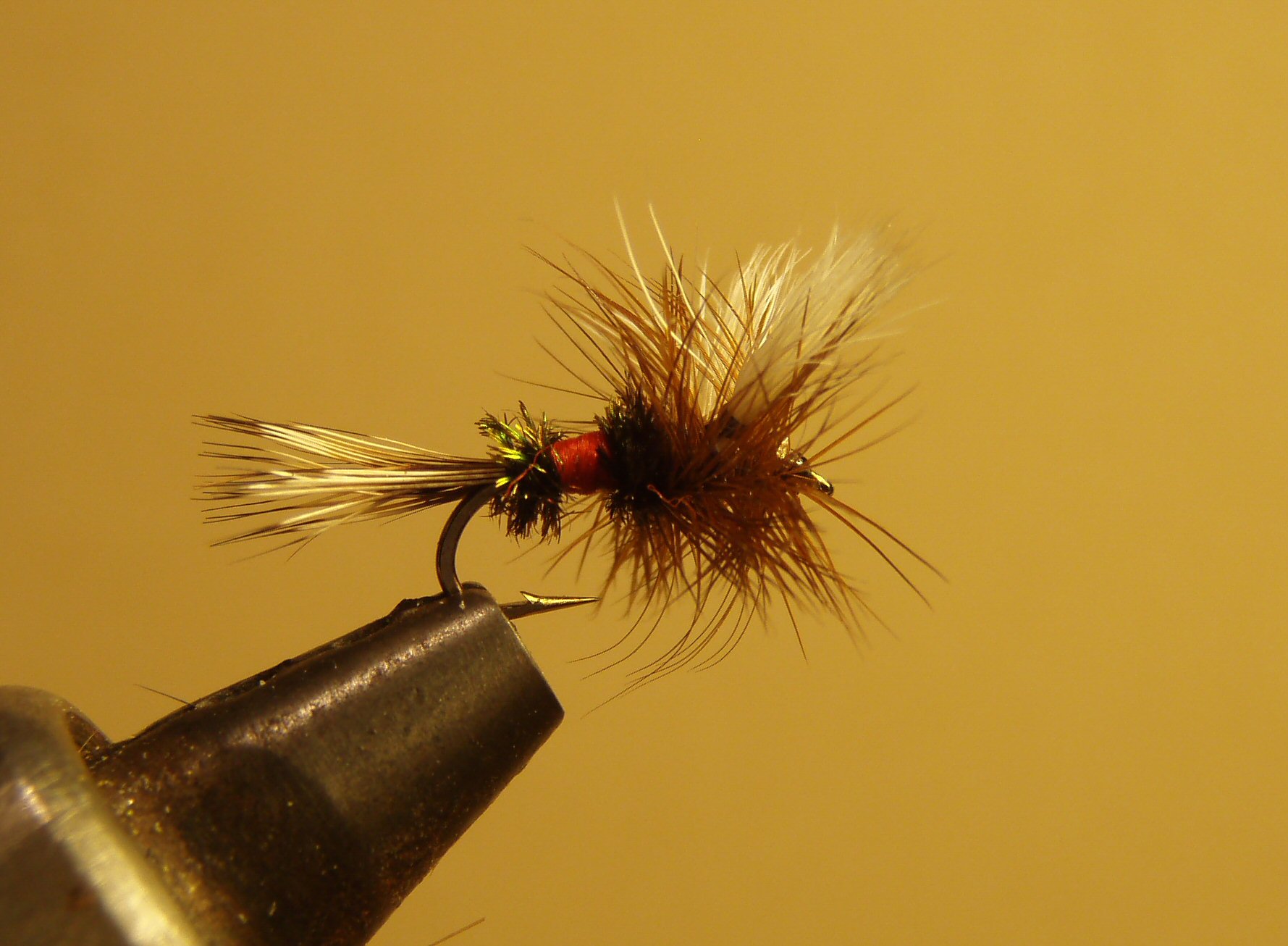
Royal Coachman
The Royal Coachman is one of the most recognizable attractor patterns in fly fishing. Originally tied as a wet fly by New York fly dresser John Haily in 1878, it was developed as a more durable variation of the older Coachman pattern and later adapted into dry-fly and streamer versions. Rather than closely imitating a specific insect, it is used as a searching pattern for trout, panfish, and other freshwater species when no obvious hatch is underway. The dry fly can be dead-drifted through riffles and pocket water, while wet versions are effective when swung below the surface. Its peacock-herl body can be fragile, and neatly setting the traditional upright wings is often the most challenging part of tying the pattern.
Tied the Royal Coachman?
Show off your version — community photos are featured right on this page.
Recipe
This page contains affiliate links. If you purchase through them, we may earn a small commission at no extra cost to you.
-
Hook · standard dry fly 10 - 16
-
Thread · black
-
Tail · gold pheasant tippets
-
Body · peacock herl and red floss
-
Wings · white duck quill
-
Hackle · chocolate brown