This post links to our product pages, which carry affiliate links. If you buy through them, we may earn a small commission at no extra cost to you.
Watch anyone fish a Woolly Bugger and the odds are they are casting it out and stripping it back. It works often enough that a lot of people never do anything else with it. Russell Blessing, the Pennsylvania tier who created the fly, did it the other way around. According to Gary Soucie's Woolly Wisdom, Blessing usually started by dead-drifting it "to see what happens," and only moved on to swinging and stripping when that failed.
That order is worth copying, because the Woolly Bugger is a different fly depending on how it moves.
What the fly is supposed to be
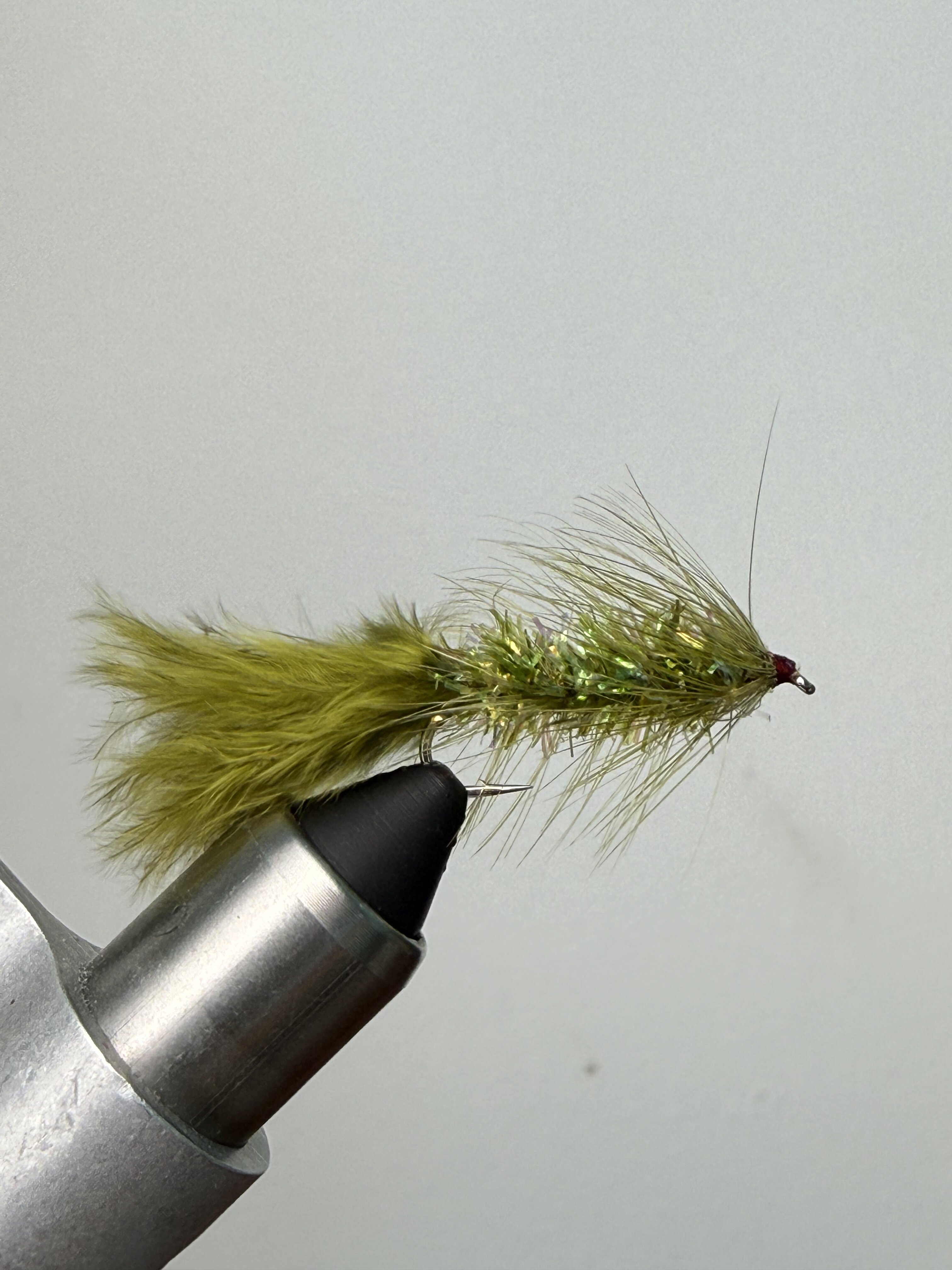
Blessing tied the first one in 1967 by adding a black marabou tail to a Woolly Worm, an olive chenille body under black palmered hackle. He meant it as a hellgrammite, the dobsonfly larva, for the smallmouth bass he liked to fish for. His young daughter is usually credited with the name. Barry Beck, who saw it catch trout on the Little Lehigh, wrote about it and did a great deal to spread it.
Our Woolly Bugger recipe is tagged as a leech, a minnow, a crayfish, a worm and a nymph, and none of those is wrong. In the vise it doesn't look much like any of them. In the water it looks like whichever one you make it act like. A drifting bugger tumbles like a dislodged nymph. One stripped in short pulls darts like a small baitfish, and one crawled slowly along the bottom hops like a crayfish. That is why the first decision on the water is the presentation, and the color and size come after.
Dead drift: fishing it as a nymph
In rivers, especially cold or high ones where trout won't chase, a dead-drifted bugger is often the most productive way to fish it. Fish it exactly as you would a big stonefly nymph. Use a floating line, enough weight to reach the bottom, and an indicator or a tight line. Cast upstream or up and across, mend so the fly sinks without drag, and set on any hesitation.
The marabou is what makes this work. Even in a drift with no drag, the tail and hackle keep breathing in the current. A size 8 or 10 in black or olive is a good default, because those colors read as a large nymph or a hellgrammite.
Don't lift and recast the moment the drift ends. As the line comes tight below you, the fly rises and swings toward the bank, and that is where a lot of fish take it. Barry Beck fished it this way, dead drift along the bottom and then a retrieve on the swing, watching the end of his fly line for a strike rather than using an indicator.
The swing: across and down
Swinging a bugger is wet-fly fishing with a heavier fly. Cast across or slightly downstream, throw a mend to let the fly sink, then let the current carry it across the river on a tight line. The fly moves broadside to the fish, which gives them a long look at it. Twitch the rod tip now and then on the swing, and let it hang straight downstream for a few seconds at the end before you strip it in.
On small streams a floating line and a weighted fly are enough. On bigger or deeper rivers, a sink-tip keeps the fly down through the swing. Keep the leader short with a sink-tip, about three to four feet, or the fly will ride above the depth the tip reaches. Takes on the swing are often hard, so let the tight line set the hook rather than striking. For trout, 2X or 3X tippet is usually right for a size 6 to 10 bugger, heavy enough for those takes and for pulling a fly free of a snag.
Stripping: baitfish and leeches
This is the presentation everyone knows, and it is the right one when fish are willing to chase. Low light and stained water both help, and so does covering a lot of bank from a boat. Cast across or up and across, let the fly sink, then strip it back. Barry Beck described the common retrieve as a six- or eight-inch strip. Vary it. Mix long, quick pulls with short twitches, and pause.
The pause matters more than most people think, and how the fly is weighted decides what it does during the pause. A bugger with a bead or cone at the front dives nose-first when you stop and rises when you pull, so a stop-and-go retrieve gives it a jigging action. A bugger weighted with wire under the body sinks more evenly and swims level. Blessing himself said that some days only fast strips worked, so if slow isn't producing, strip as fast as you can for a few casts.
When a fish takes a stripped fly, keep stripping to set the hook rather than lifting the rod. A strip-set keeps the fly in the zone if you miss.
Crawling it for crayfish
Crayfish live on rocky bottoms, and smallmouth bass and big brown trout eat a lot of them. To make a bugger into one, it needs to stay on the bottom. Fish a heavily weighted bugger on a floating or sinking line, let it sink all the way, and then retrieve it with short hops and long pauses so it lifts and falls back to the rocks. Brown and olive are the usual crayfish colors, sometimes with a touch of orange. Expect to lose some flies, which is the argument for the point-up versions described below.
If you would rather tie a crayfish than make a bugger act like one, Brown's Crayfish is about as simple as crayfish patterns get. It is Don Brown's fly, from Dick Stewart's Flies for Bass and Panfish: red squirrel tail for the claws, a brown chenille body with palmered hackle for legs, and a turkey slip pulled over the back as the shell. It was first tied unweighted for bass and panfish near the surface. For crawling it along the bottom, add wire under the body, as the recipe suggests for trout in faster water.
Lakes and ponds
In stillwater the Woolly Bugger is mostly a leech, and leeches swim slowly near the bottom and weed edges with a steady, undulating motion. The common mistake is the one the Orvis stillwater lessons point to: anglers don't let the fly sink long enough, and then they retrieve it too fast.
Use the countdown method. A sinking line's sink rate is printed on the box in inches per second. Count as it sinks, start the retrieve at a different count each cast until you find the fish, then keep counting to that number. An intermediate line is a good all-round choice for lakes because it sinks slowly and keeps the fly at a steady depth during a slow retrieve. A faster-sinking line reaches deeper water.
For the retrieve, a hand-twist is often the most effective. Roll the line into your palm an inch or two at a time, with short strips and pauses mixed in. Some lake anglers fish a bugger under an indicator and let the wind and waves move it, which sounds dull and often works when nothing else does.
For bass in ponds, work a bugger along weed edges and fallen timber with a strip-and-pause retrieve, and expect takes as it falls. For bluegill and other panfish, a size 10 fished slowly near cover is about right, and a smaller Woolly Worm works too.
Tie it for the way you'll fish it
Because the presentation decides what a bugger is, the most useful thing a tier can do is tie different weights on purpose and keep them in separate rows of the box. The full steps are on the recipe page, and the Woolly Bugger shop page lists everything it calls for.
Wire under the body sinks the fly evenly and keeps it level. It is the best choice for dead drifting and swinging. Our recipe lists lead wire as optional. Wrap it on the middle of the shank, and keep it off the front so there's room for a neat head.
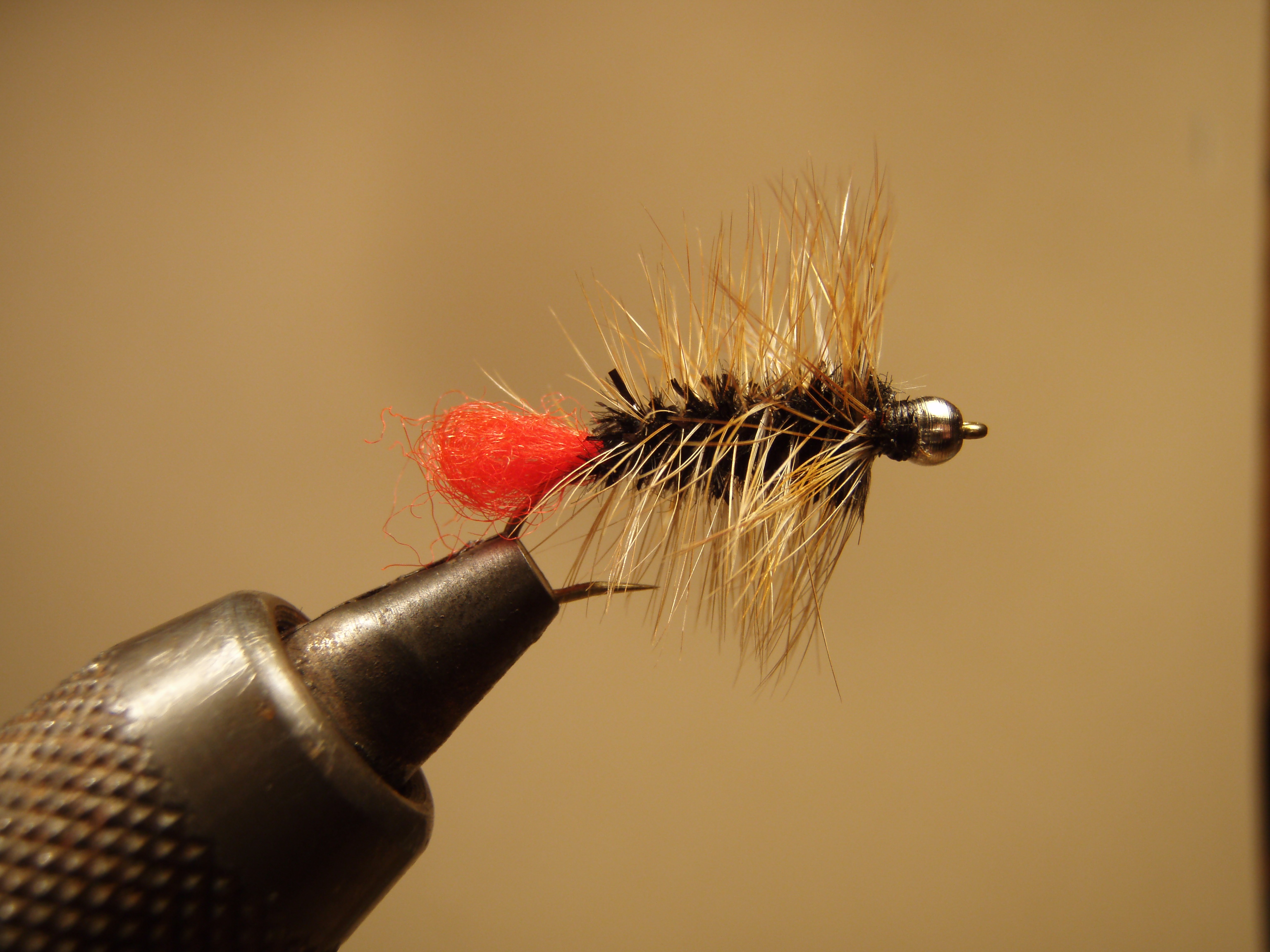
A bead or cone at the head gives the stop-and-go jigging action described above and gets the fly down fast. Our Beadhead Woolly Bugger takes a brass bead or a tungsten one, which sinks faster for the same size. That recipe palmers marabou forward as the body in place of chenille, which makes a softer, more leech-like fly. The Conehead Woolly Bugger is the heavier version: a copper cone backed by lead wire, tied in brown on a Tiemco 5262 in sizes 4 to 10. Its hackle is tied in at the front and spiraled back toward the tail, then locked down by counter-wrapping copper wire forward through it. That is the version to drag over rocks, because the wire keeps a broken hackle stem from unraveling.
Dumbbell eyes tied on top of the shank flip the fly over so it rides point-up. It hops along the bottom with fewer snags, which is the version to tie for crayfish.
No weight at all is right for lakes fished on a sinking line, and for shallow bass water where a fly that lands softly and sinks slowly gets eaten on the fall.
The materials matter too. The recipe calls for a 3X- or 4X-long streamer hook in sizes 2 to 10, a marabou tail and a chenille body. Keep the tail about the length of the shank and use the natural tips of the marabou. A tail much longer than that tends to foul around the hook bend when you cast. For the palmered hackle, choose a soft, webby feather such as strung saddle hackle rather than a stiff dry-fly saddle. Webby hackle collapses and pulses in the water, while stiff hackle stands out like a bottle brush. Schlappen is the webbiest choice, especially on larger flies. The recipe lists a few strands of Krystal Flash in the tail as optional, and many tiers add it for stained water.
The Woolly Worm and the Jig-a-bugger
The Woolly Worm is the Woolly Bugger's ancestor. It is a palmered fly with a short tail. Variations go back to the British palmer flies of the 1600s, and it was fished for bass in the Ozarks before Don Martinez, who ran a fly shop in West Yellowstone in the 1930s and early 1940s, did more than anyone to popularize it for western trout. Our recipe is the classic black chenille body under palmered grizzly hackle with a red hackle-fiber tail and a fine silver wire rib. With no marabou it doesn't move much when stripped, so it is best fished like a nymph, dead-drifted or swung slowly as a stonefly nymph or hellgrammite. Counter-wrap the wire through the hackle so a fish's teeth can't cut the stem.
The Jig-a-bugger builds the bugger on a painted lead jig head. The hook rides point-up, so it snags less on the bottom. Our recipe is a steelhead fly, fished under a float so it hangs just off the bottom. It can also be jigged or drifted slowly for trout. The recipe's main tying warning is the tail: keep the marabou to about a shank length and not too bulky. One caution: Yellowstone National Park allows only lead-free flies and bans jigs with lead molded onto the hook, so a lead-headed Jig-a-bugger can't be used there. A tungsten bead on a jig hook gives the same posture. Check the rules for lead wherever you fish.
The Egg Sucking Leech, a dark leech body behind a bright egg-colored head, is fished the same ways.
When nothing is working
Go back to Blessing's sequence and change one thing at a time. Dead-drift the bugger first. If that doesn't work, swing it, and only then start stripping, slowly at first and then fast. If the fish still aren't taking, change the depth before the color. A bugger fished above the fish is a more common reason for a blank day than the wrong shade of olive.