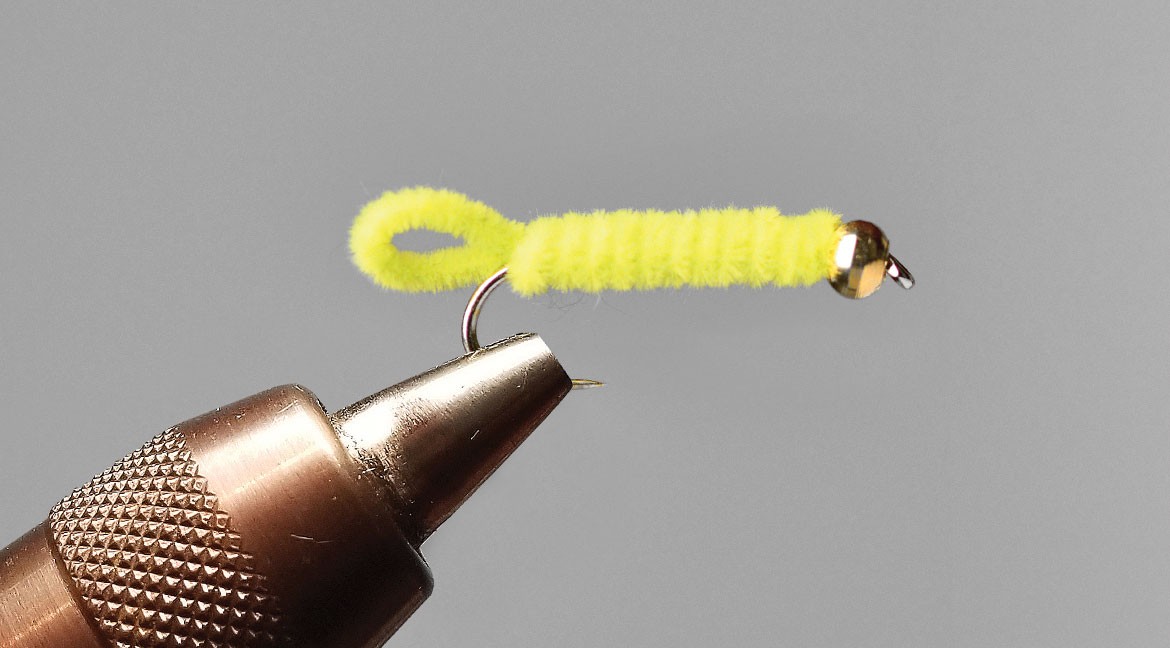
Green Weenie
The Green Weenie is a simple but highly effective terrestrial pattern used primarily to imitate inchworms and other small caterpillars that fall from streamside vegetation. It is especially productive during the warmer months and after wind or rain, when these insects are more likely to enter the water. Although floating versions exist, the Green Weenie is most often dead-drifted below the surface like a nymph, either alone, beneath an indicator, or as part of a two-fly rig. It is commonly tied in sizes 10 through 16, with weighted and bead-head versions used for deeper or faster water. The pattern is exceptionally easy to tie, with the main consideration being securing the chenille firmly while keeping the body slim and properly proportioned.
Tied the Green Weenie?
Show off your version — community photos are featured right on this page.
Recipe
This page contains affiliate links. If you purchase through them, we may earn a small commission at no extra cost to you.
-
Hook · 3x Streamer hook, size 10-16
-
Head · Gold or brass bead
-
Thread · Fluorescent Green
-
Body · Fluorescent Green Chenille
-
Tail · Fluorescent Green Chenille
Tying Instructions
-
1
Place a bead on your hook and secure the hook in the vise.
-
2
Start the thread at the back of the hook and wrap forward, laying a nice thread base.
-
3
Tie in a piece of chenille just behind the bead head and wrap the thread over it to the bend of the hook.
-
4
Fold the chenille back for form a loop for the tail. It should rest vertically. Secure the loop with several wraps of thread, then advance the thread forward to the bead.
-
5
Wrap the chenille forward to the bead to create the body of the fly. Use several thread wraps to secure the chenille behind the bead, then snip the excess.
-
6
Finish the fly with a whip finish or a few half hitches, and put a dab of head cement over the bead.