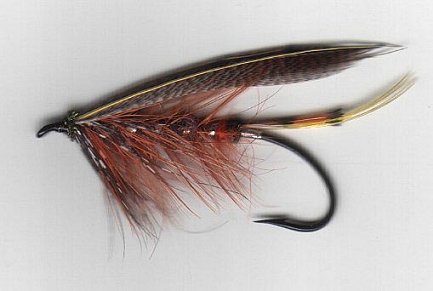
Fiery Brown
The Fiery Brown is a classic Irish wet fly developed for fishing the large loughs of Ireland. It is a versatile attractor that can suggest freshwater shrimp early in the season, midges during spring, and caddisflies later in the year. The pattern is commonly fished as part of a team of wet flies, either on the point or a dropper, and can be retrieved, drifted, or worked through waves from a drifting boat. Fiery Browns are generally tied in sizes 8 through 12 and are effective for brown trout throughout much of the season. When tying the pattern, the body should remain rough enough to create movement, while the bronze mallard wing should be mounted evenly without making the fly excessively bulky.
Tied the Fiery Brown?
Show off your version — community photos are featured right on this page.
Recipe
This page contains affiliate links. If you purchase through them, we may earn a small commission at no extra cost to you.
-
Hook · streamer 6X sizes 2 - 6
-
Thread · black
-
Tag · gold floss & tinsel
-
Rib · ffine oval gold tinsel
-
Body · fiery brown dubbing (seal substitute)
-
Throat · brown hackle
-
Wings · bronze mallard
-
Cheeks · jungle cock eyes (optional)
Tying Instructions
-
1
Fix the hook in the vice and run close turns of thread down the shank to the bend. Catch in a few strands of golden-pheasant tippet feather plus two inches of fine oval gold tinsel.
-
2
Carry the thread over the waste ends of both the tinsel and the tippet strands to form a solid, even base for the body. Remove any excess material with scissors.
-
3
Draw a few inches of thread from the bobbin and apply a light coating of fly-tyer’s wax. This is sticky and will help the fur used for the body to adhere to the thread.
-
4
Take a good pinch of fiery brown seal’s fur and apply it evenly along the tying thread.
-
5
Between finger and thumb, twist the fur on to the thread in a process known as dubbing. Starting at the base of the tail, wind the fur along the hook shank. Keep the turns close together so no gaps are left but do not overlap them.
-
6
Carry the dubbed seal’s fur right along the shank, stopping just short of the eye. It is important to leave a small gap to accommodate the hackle and wing.
-
7
Take hold of the oval gold tinsel and wind it along the body in open, evenly spaced turns. Although it doesn’t really matter, it is traditional for a fly of this type to have five turns of ribbing.
-
8
Secure the tinsel at the eye and remove the excess. Next, take a cock hackle dyed fiery brown and, having removed the waste fibres at the base, catch it in at the eye.
-
9
Using hackle pliers, wind on three turns of hackle. Secure then remove the excess tip and stroke the fibers beneath the hook. Take a slip of bronze mallard three times the width of the intended wing.
-
10
Fold one edge of the slip to the center then fold again to create a rolled wing. Catch the wing in on top of the hook with two or three winging loops. Secure with tight turns of thread then remove the excess feather.